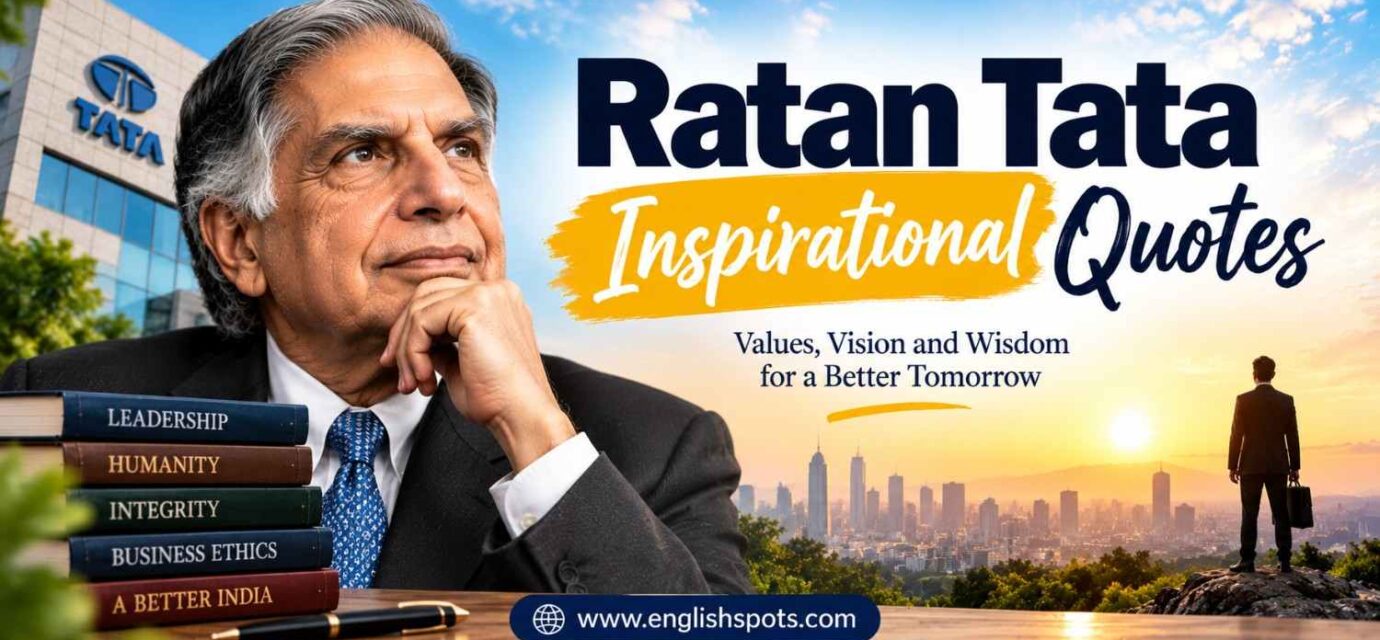

Ratan Tata Inspirational Quotes on Life, Leadership, and Success
Ratan Naval Tata was an influential Indian industrialist and philanthropist whose leadership helped shape the modern Tata Group. He was respected for his business vision, commitment to social responsibility, and support for initiatives in education, healthcare, and community development.
His life offers valuable lessons about leadership, business, humility, and helping others. In this article, discover a sourced statement from Ratan Tata, explore its meaning, and learn practical lessons inspired by his public life and work.
Ratan Tata Inspirational Quotes About Helping Others
“It is our duty to play whatever role we can, in whichever way we can, to diminish those disparities.”
Source: Tata Trusts: Ratan Tata — His Legacy and Vision.
Meaning of This Quote
This statement highlights the responsibility people and organisations can have towards society. Personal success is important, but it can also create opportunities to support people who face difficulties or have fewer resources.
Helping others does not always require significant money or influence. Sharing knowledge, mentoring a student, volunteering, or supporting a meaningful community initiative are practical ways to contribute.
Key takeaway: Think about how your skills, time, and resources can make a positive difference to other people.
Ratan Tata Inspirational Lessons About Success
Success is not the same for everyone. It may mean building a business, developing a career, supporting a family, or contributing to a cause that matters to you.
Ratan Tata’s career offers an opportunity to reflect on long-term thinking, adapting to change, and making decisions with a sense of responsibility. His professional legacy also shows how business achievements can exist alongside a commitment to broader social goals.
Original Motivational Reflections About Success
- Build a definition of success that reflects your values and priorities.
- Focus on developing skills that help you solve real problems.
- Learn from mistakes instead of allowing one setback to define your progress.
- Consider the long-term effects of important decisions.
- Recognise that success can include the positive contribution you make to others.
These are original reflections written for this article, not direct quotations from Ratan Tata.
How to Apply These Lessons
Start by identifying a meaningful goal. Decide what you need to learn, make a realistic plan, and review your progress regularly.
When circumstances change, be prepared to adjust your approach. Success is rarely guaranteed, but thoughtful planning and continuous learning can help you make better decisions.
Ratan Tata Leadership Lessons for Young Professionals
Leadership involves more than holding a senior position. It requires making thoughtful decisions, communicating clearly, accepting responsibility, and respecting the people affected by those decisions.
Ratan Tata’s experience leading the Tata Group provides a useful context for reflecting on organisational responsibility and long-term business thinking.
Five Original Leadership Lessons
- Listen before deciding. Consider different perspectives before choosing a course of action.
- Take responsibility. Acknowledge mistakes and work towards correcting them.
- Respect your team. Recognise the contributions of the people who help achieve shared goals.
- Think beyond immediate results. Consider the long-term effects of your decisions.
- Build trust through actions. Be consistent, honest, and respectful in your professional relationships.
These are general leadership lessons, not quotations attributed to Ratan Tata.
How to Become a Better Leader
You can practise leadership even without a formal management position. Take ownership of your work, support colleagues, communicate expectations clearly, and remain open to constructive feedback.
Strong leadership develops through everyday decisions and the way you treat other people.
Ratan Tata Inspirational Lessons About Humility
Humility means recognising that there is always something new to learn. It involves respecting others, accepting feedback, and appreciating the contributions people make towards shared achievements.
Original Reflections About Humility
- Stay open to learning, regardless of your experience.
- Respect people for their character and contributions, not just their position.
- Accept constructive criticism as an opportunity to improve.
- Acknowledge the people who support your progress.
- Let your behaviour demonstrate the values you believe in.
These are original reflections about humility, not direct quotations from Ratan Tata.
Why Humility Matters in Everyday Life
Being willing to learn helps you recognise areas where you can improve. It can also strengthen relationships by encouraging honest communication and mutual respect.
Practise humility by listening carefully, admitting when you do not know something, and appreciating other people’s efforts.
Ratan Tata Business Lessons for Entrepreneurs
Building a business involves more than having a good idea. Entrepreneurs must understand their customers, manage resources, respond to competition, and make decisions under uncertainty.
Ratan Tata’s business career offers a starting point for reflecting on long-term strategy, innovation, and responsible management. These lessons can be useful to both new entrepreneurs and experienced business owners.
Practical Business Lessons for Entrepreneurs
- Understand your customers. Identify the problems your products or services are meant to solve.
- Use feedback. Listen to customers and improve your offering when necessary.
- Manage resources carefully. Plan spending and prepare for uncertainty.
- Think long term. Consider the future consequences of major business decisions.
- Build trust. Provide reliable service and communicate honestly.
- Act responsibly. Consider how your business decisions affect employees, customers, and the wider community.
These are practical business recommendations, not direct quotations from Ratan Tata.
How New Business Owners Can Apply These Lessons
Start by understanding your target customers and the value your business can provide. Test your ideas, monitor costs, and use real feedback to make improvements.
Growth is important, but a sustainable business also depends on sound financial decisions, customer trust, and consistent service.
Ratan Tata’s Legacy of Philanthropy and Social Responsibility
Ratan Tata’s legacy includes a strong association with philanthropy and public welfare. Tata Trusts has supported initiatives across areas such as healthcare, education, livelihoods, and community development.
Learn more from the official Tata Trusts profile on Ratan Tata’s legacy and vision.
What Can We Learn From His Philanthropic Legacy?
Social responsibility is not limited to large organisations or wealthy individuals. People can contribute in ways that match their abilities and resources.
- Help someone gain access to knowledge or learning opportunities.
- Volunteer with a community organisation when possible.
- Share professional skills with people who may benefit from them.
- Support causes that address genuine community needs.
- Consider how your choices affect people beyond your immediate circle.
These are original reflections inspired by the broader theme of social responsibility, not quotations from Ratan Tata.
Ratan Tata Inspirational Lessons About Personal Growth
Personal growth involves learning from experience, improving your skills, and developing values that guide your decisions. It is a gradual process rather than a single achievement.
- Keep learning when your work or circumstances change.
- Review your mistakes and identify what you can do differently.
- Build habits that support your long-term goals.
- Listen to perspectives that challenge your assumptions.
- Measure progress through meaningful improvements, not appearances alone.
These original reflections offer practical ideas for personal growth and are not direct quotations attributed to Ratan Tata.
How to Apply These Lessons in Everyday Life
Inspirational ideas become more useful when you connect them with your own decisions and actions. Use the following steps to turn a lesson into a practical plan.
- Choose a goal. Identify one personal, educational, or professional goal that matters to you.
- Make a plan. Decide which actions will help you move forward.
- Keep learning. Develop the skills and knowledge you need.
- Act responsibly. Consider how your decisions affect other people.
- Seek feedback. Learn from people who can offer constructive advice.
- Contribute to others. Find a practical way to share your knowledge or help your community.
- Review your progress. Identify what worked and what you can improve.
You do not need to change everything at once. Start with one manageable action and build a routine that you can maintain.
Frequently Asked Questions
Who Was Ratan Tata?
Ratan Naval Tata was an Indian industrialist and philanthropist who served as chairman of Tata Sons and helped guide the Tata Group through a period of significant growth and international expansion. He was widely recognised for his business leadership and commitment to social causes.
Why Are Ratan Tata Inspirational Quotes Popular?
Readers look to Ratan Tata’s public life, business leadership, and philanthropic work for lessons about responsibility, long-term thinking, and contributing to society.
What Can Entrepreneurs Learn From Ratan Tata?
Entrepreneurs can reflect on the importance of understanding customers, adapting to change, building trust, planning for the long term, and considering the wider effects of business decisions.
What Can Students Learn From Ratan Tata?
Students can learn the importance of continuous learning, thoughtful decision-making, humility, and using their abilities to contribute positively to society.
How Can I Verify a Ratan Tata Quote?
Look for the original speech, interview, official publication, or another reliable source that records the exact wording. If you cannot verify the source, do not present the statement as a confirmed quotation.
Can I Publish Ratan Tata Quotes on My Website?
Check the applicable copyright status and permissions before reproducing quotations. Attribution alone does not automatically grant permission to republish copyrighted material. Add original commentary and seek permission when required.